DIMENSIONAL CONTROL SYSTEMS 
ENGINEERING IN NEW DIMENSIONS 
 Quick links Home DCS Info Software Services Education Tech Supt Industry Employment

Software Solutions

  1DCS
  DCS-DFC
  3DCS
      Analyst
      Designer
  3DCS 
    CAA V5 Based
      Analyst
      Designer
  GDM-3D
      Specialist
      Analyst

      Corporate
      DataGrabber

Software Distribution Network / Inquires

Service Solutions


3DCS Analyst


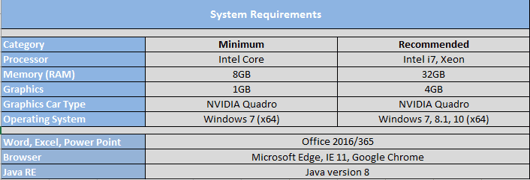
3DCS is a World Class Tolerance Simulation Tool that allows you to model the effect of variation on an assembly, Determine the "Robustness" of your design, and test Alternative Tolerancing Schemes.  3DCS is a True 3D modeling system that visually depicts variation in your design, and statistically simulate production of your "Virtual Assemblies." But it doesn't require that you purchase an Expensive Workstation.  All of this can be done on an inexpensive PC.  Here are some of the Key Features of 3DCS:


Graphics Based Modeling:
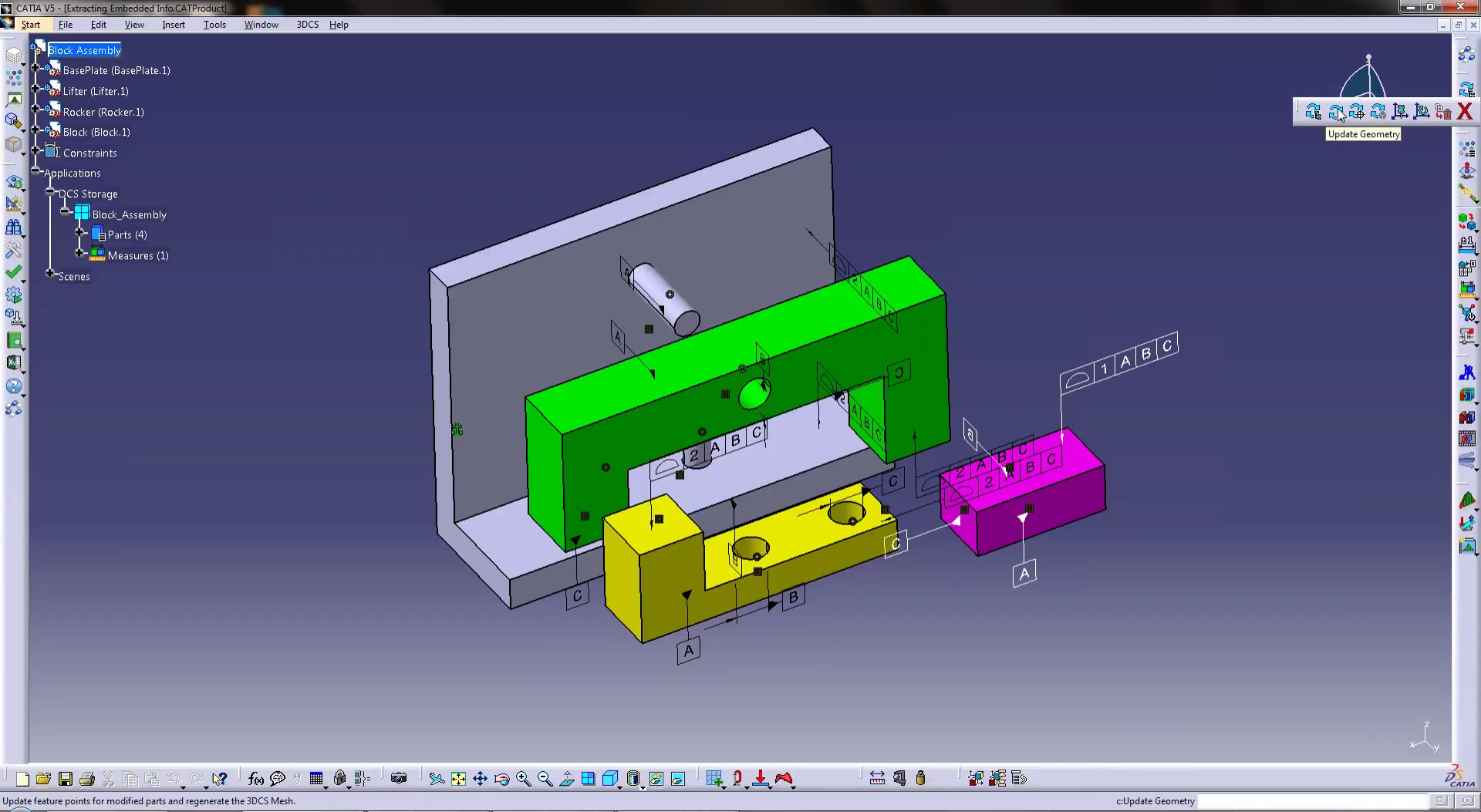
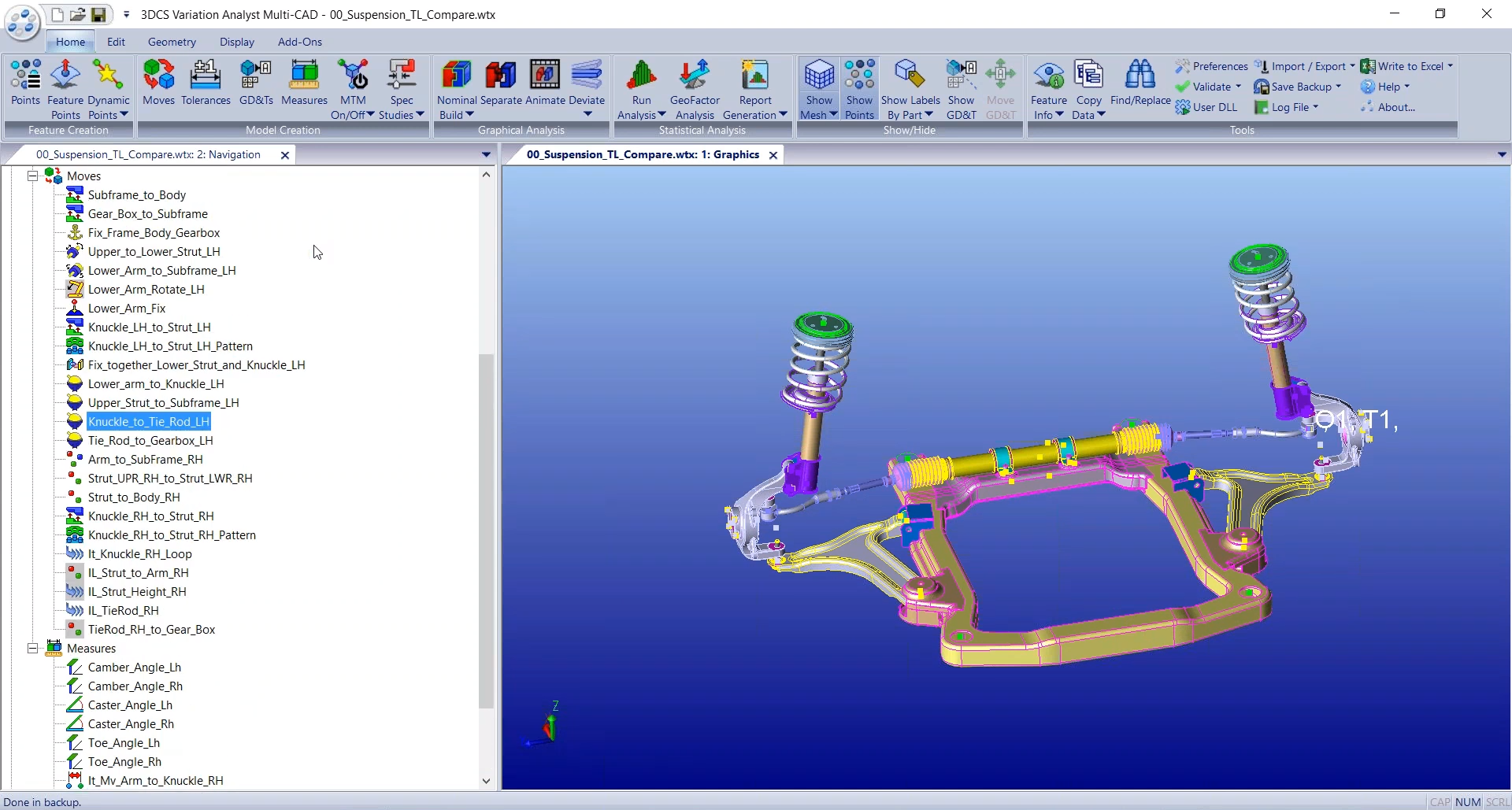
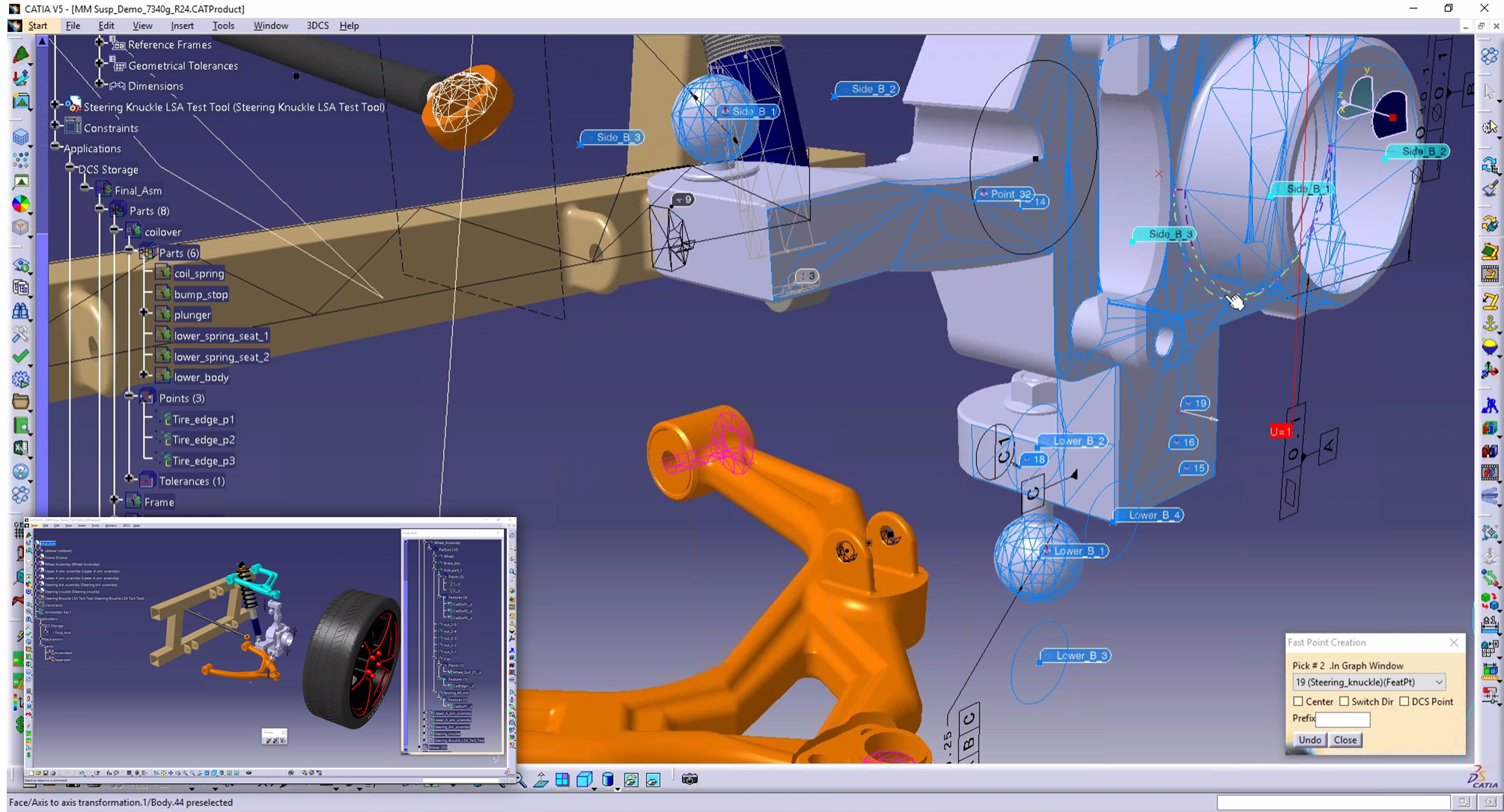
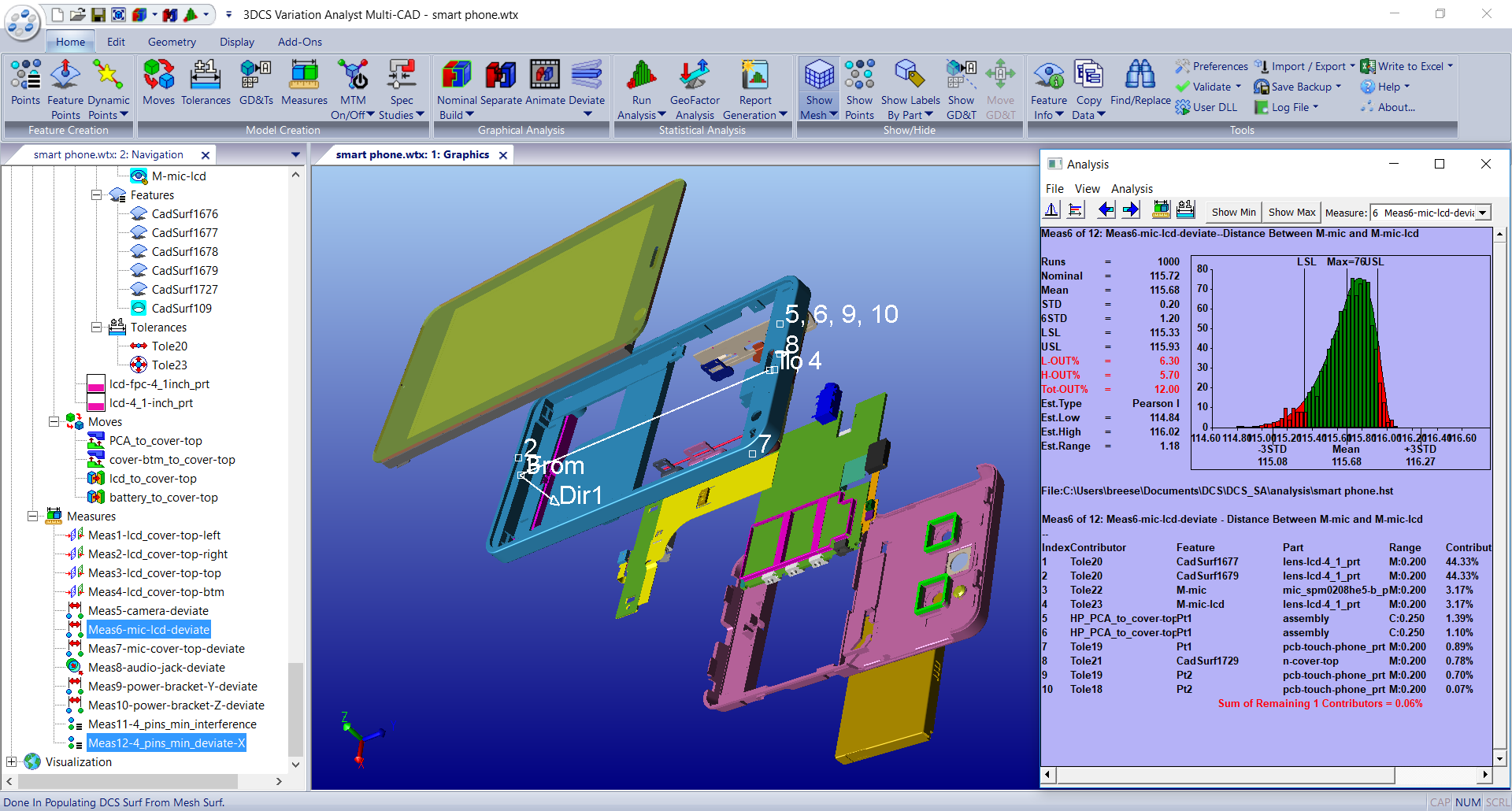
3DCS is a Graphics-Based Package.  It employs a 3-Dimensional Display that is unique in its class.  The User Interface is similar to many high-end CAD systems and allows you to Pan, Zoom, and Manipulate the True 3-D Parts and Assemblies.  Parts can be imported into the software from most any CAD system as IGES data, or Parts can be created directly in the Software.

Easy to Use Menus:
3DCS is designed to run on the Windows operating systems, so it makes full use of the Simple Windows User Interface.  Clear Menus and Toolbars allow for the quick generation of models and No Programming is Required.  An Engineer or designer who is familiar with CAD systems can be modeling parts and assemblies in just a few short days.

Graphic Display of Variation:
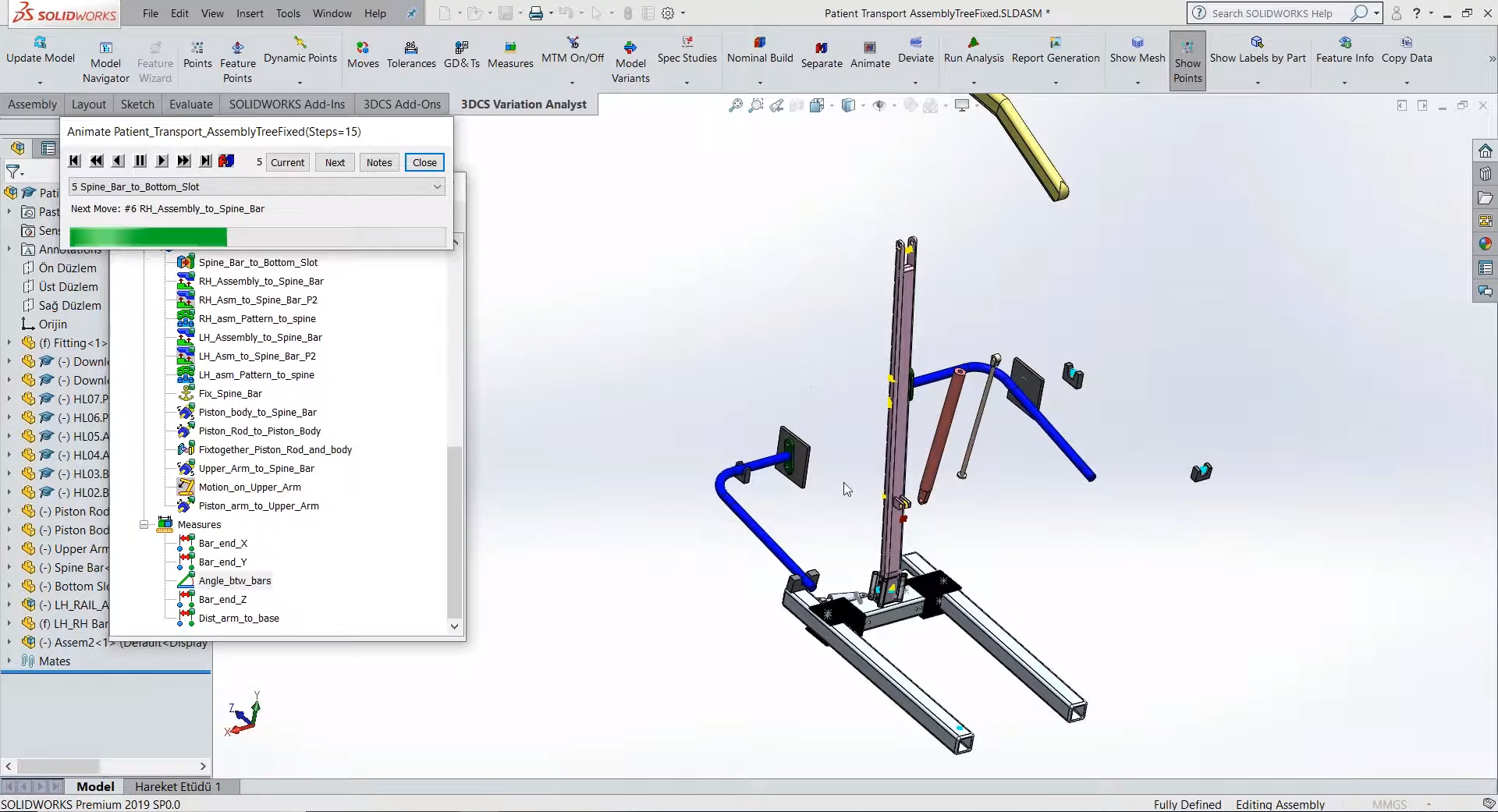
Because 3DCS is Graphical in nature, you will actually be able to see the variation as it is simulated.  Features move based on GD&T callouts, parts move in their assemblies, and measurements change.  If a picture is worth a thousand words, imagine the value of viewing an animated assembly sequence and assembly variation!

Complete Statistical Data:
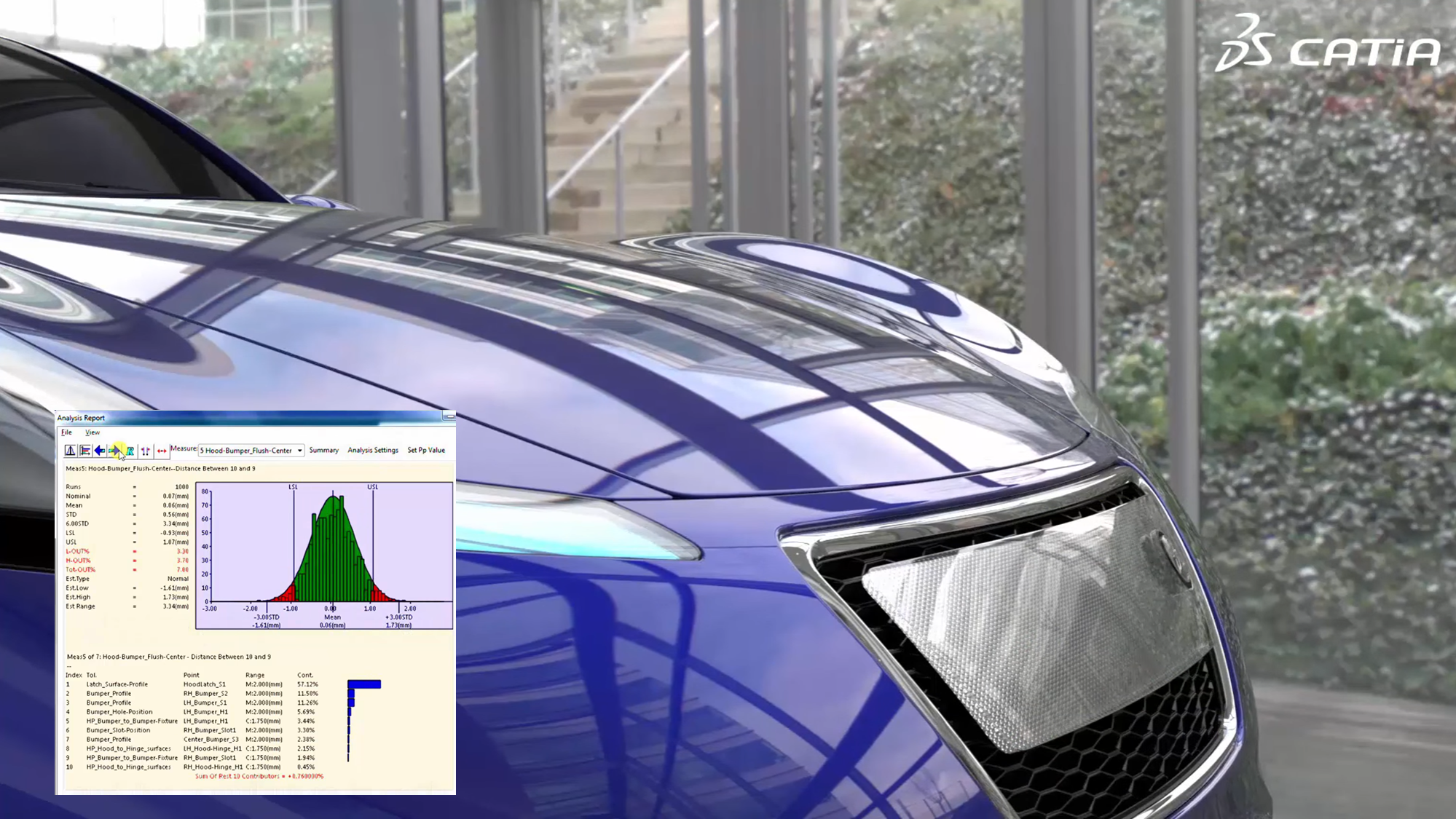
3DCS uses a Monte Carlo Random Number Generator to assign a value for each tolerance during each and every Simulated Build.  You can select a Distribution Type for each Tolerance from a list of distributions-type that include, Normal, Weibull, Uniform, and User-Defined.  The output of each simulation comes in the form of Complete Statistical Results that include, Standard Deviation, % Out of Spec, Tolerance Ranges, Cp, Cpk, and a Histogram that graphically displays the distribution for each measurement in the model.

Complete Assembly Diagrams:
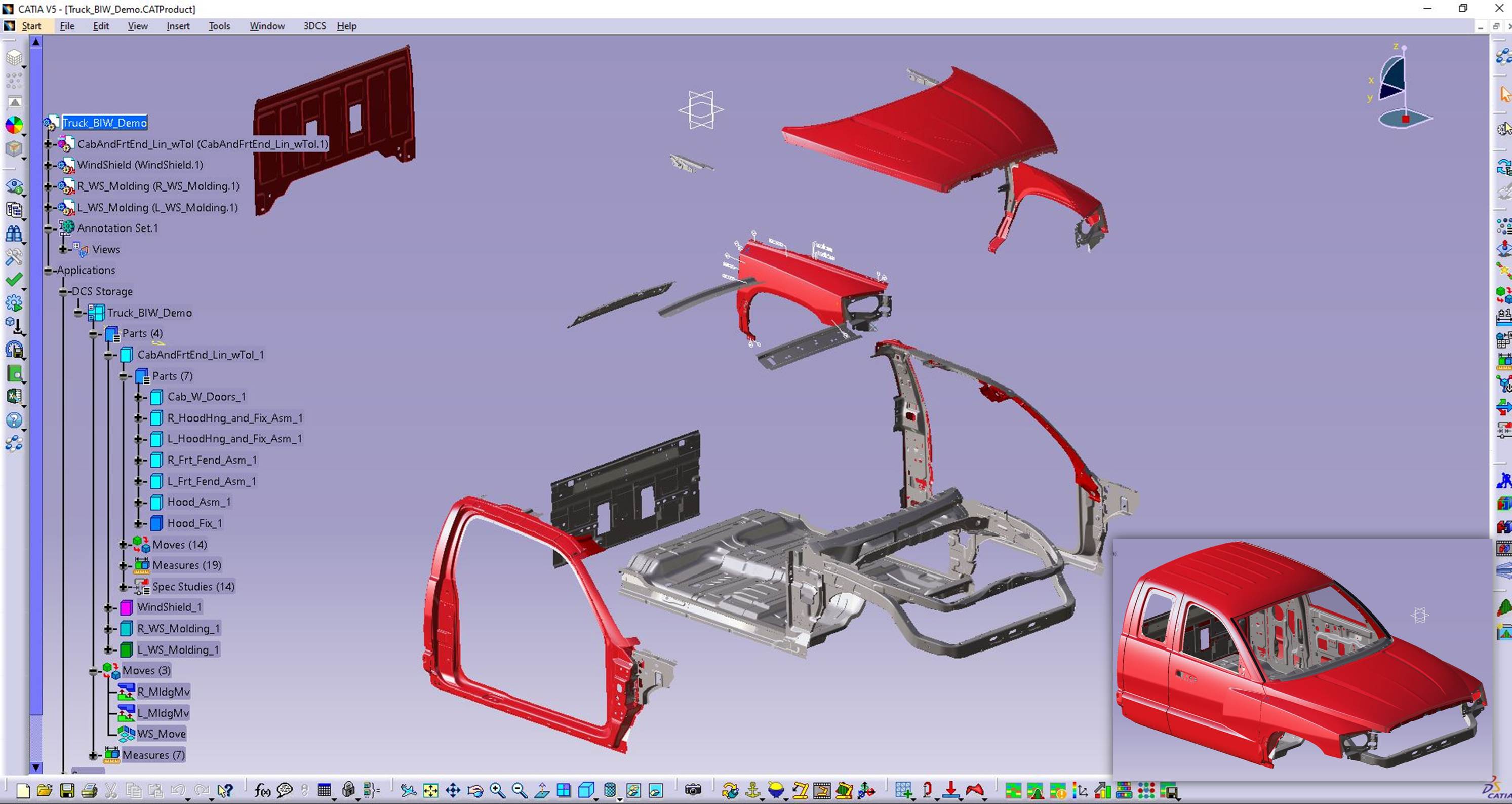
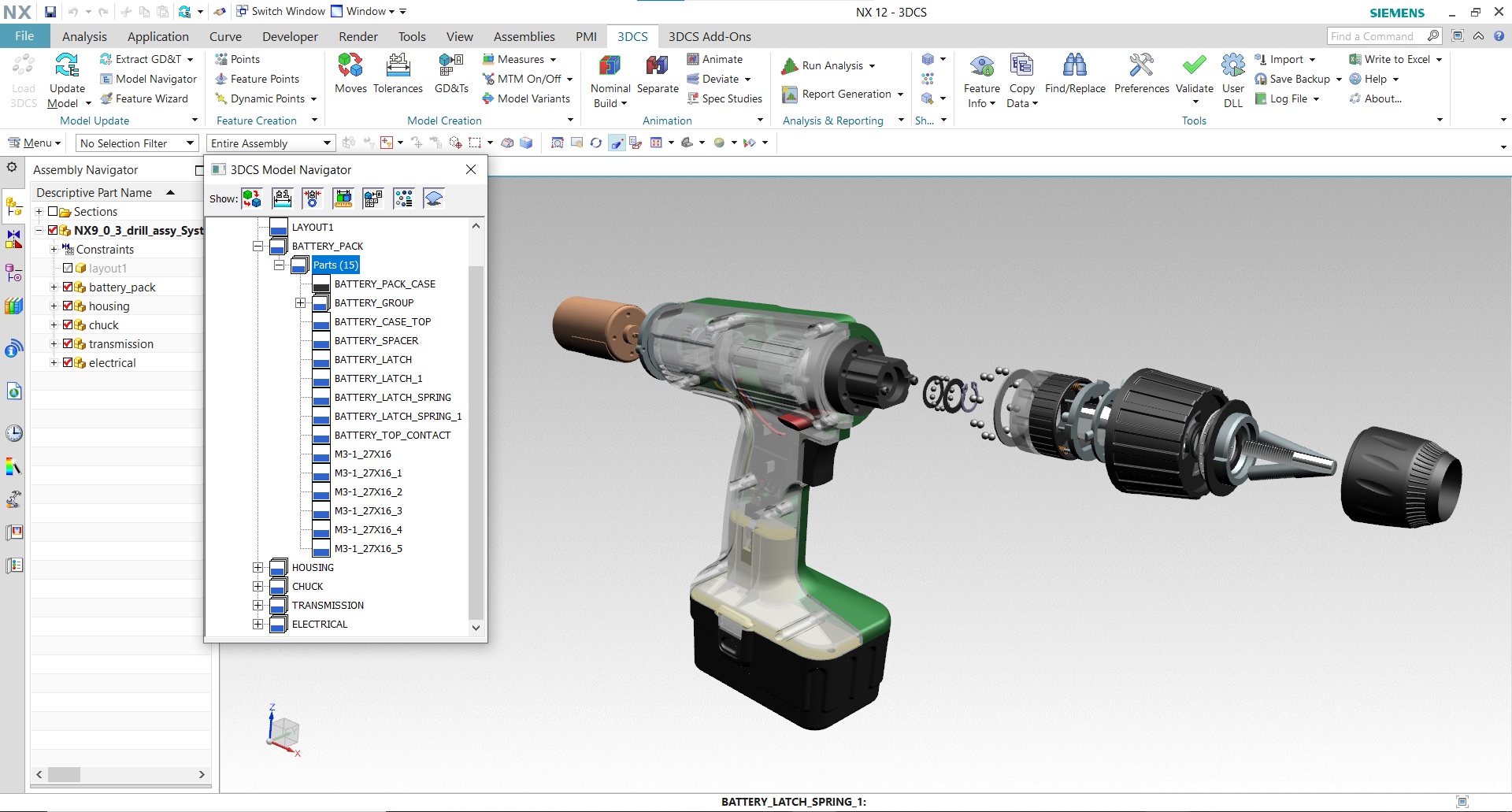
Following an exact assembly sequence is critical when modeling variation in an assembly.   To make that possible, 3DCS uses an assembly tree to display the relationships between parts and sub-assemblies.  Each part, sub-assembly, and fixture is identified in the correct assembly sequence and each element in the assembly tree shows it's associated moves, measures and tolerances for quick assessment of the model.

Key Contributors to Variation:
Determining the Root-Cause of Variation in an assembly is one of the most important parts of Variation Simulation.  That's why 3DCS identifies Key Contributor for each and every measurement in your model. 3DCS provides designers and engineers an analysis of the extent and source of variation in a model.  This allows for Pareto Analysis, as well as a study of Sensitivity in the model.


| Contact Us  | Job Opportunities | Home | Search |
    © 2004 Dimensional Control Systems, Troy MI, 48084.

Tolerance Stack up, Tolerance Analysis, Variation Analysis, 3Dcs,Analysis Software,Data Reporting,Dimensional Control,Dimensional Control Systems,Dimensional Engineering,Dimensional Management, dimensional variation,GD&T,GDM,GDT,Geometric Dimensioning & Tolerancing,Graphic Tolerance Analysis,Graphical Data Management,Monte Carlo, Tolerance Allocation,Tolerance Analysis,Tolerancing,Variation Analysis,Variation Simulation,Variation Simulation Analysis,1Dcs,CAD,CATIA, Data Analysis,Data Grabber,Data Management,DCS,dimensional,Dimensional objectives,Dimensional requirements,Dimensional specifications,FD&T, feature-based analysis modeling,Geo Factor,Geo-Factor,HLM Analysis,Measurement,modeling,PDM,Process Animation,process simulation, Product Data Management,Product Development,Product Lifecycle Management,Quality Control,Root Cause Analysis,rss,Simulation,six sigma, software,Statistical Process Control,Statistical Quality Control,supplier integration,Tolerance,Tolerance Deviation,Tree diagram,UG, Unigraphics,variation,6-sigma,Allocation,assembly animation,assembly build analysis,assembly information,CAE,CMM Data Charting,CMM Reporting, Deformation analysis,design constraints,Feature Dimensioning & Tolerancing,Gage R&R,Gage RR,Geometric specifications,Histogram, process capability,quality,r&r,Requirements engineering,Run chart,sigma scope,SPC,Tolerance Management,visual simulation,3-sigma,cmm, CMM Charting,CMM Data Importing,Kinematic,Sensitivity,Stack up,VSM,1D,3D,3-D,Analysis,Engineering,engineering software,VSA